
Why Big Box Stores Are a Gamble

You picked the perfect tile. You've pictured the finished room a hundred times. Then the install is done and something is off: a patch of the floor looks a little darker, a few rows on the shower wall look a little warmer, and no amount of squinting makes it go away.
More often than not, the culprit is something most homeowners have never heard of until it's too late: the dye lot.
WHAT IS A DYE LOT, ANYWAY?
Tile isn't made in one giant batch. It's produced in separate production runs, and each run is given a lot number (you'll sometimes hear it called a dye lot, shade lot, or batch number). Even with the same manufacturer, the same product name, and the same SKU, tiles from different lots can vary in color, tone, finish, and sometimes even size.
Sometimes the difference is dramatic. Sometimes it's subtle in the showroom and glaring once it's under your bathroom lighting. Either way, it's the kind of thing you can't unsee.
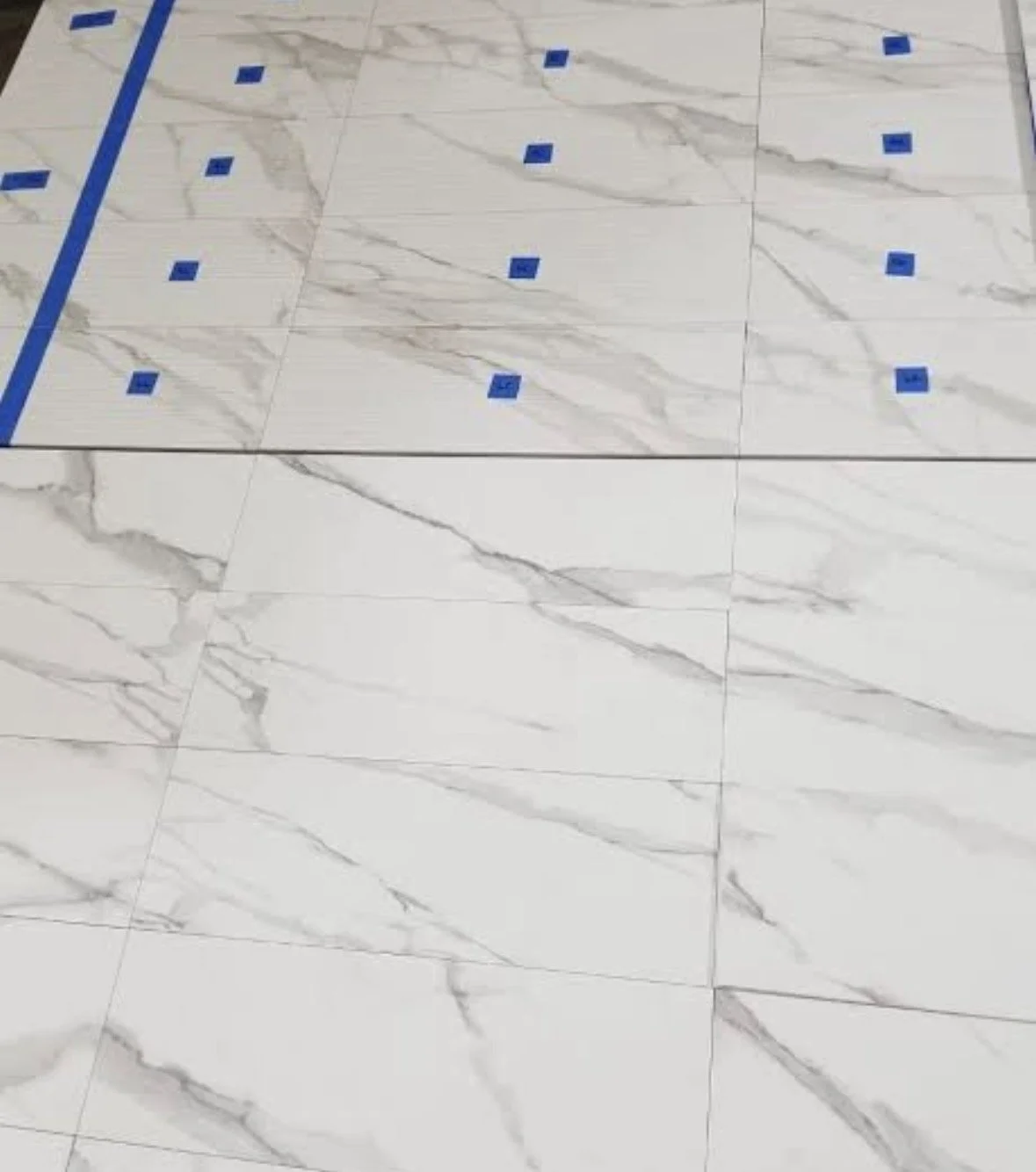
Take a look at the floor above. Same product, same pattern, same look on paper. But the two sections clearly don't match.
WHAT DYE LOT ISSUES ACTUALLY LOOK LIKE
They show up in different ways depending on the tile:
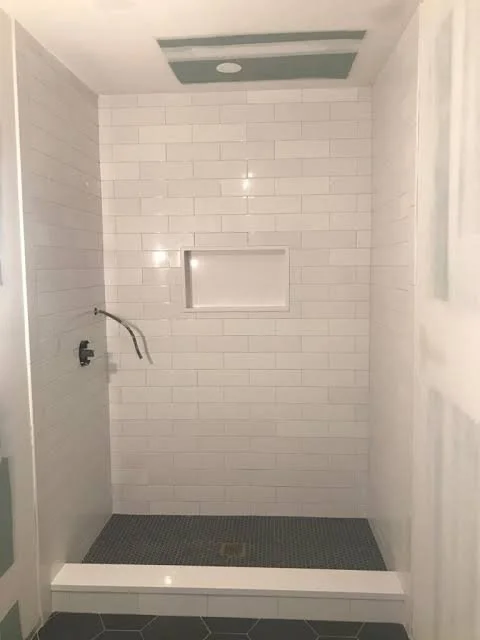
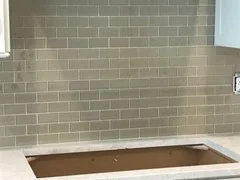
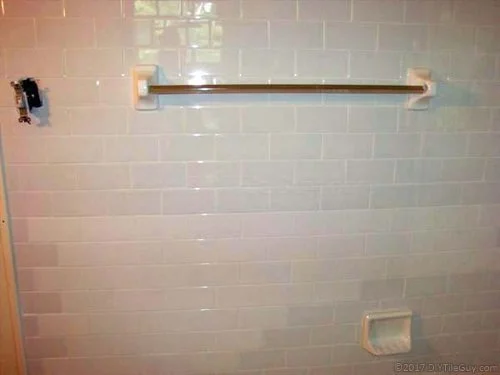
Subway tile is one of the most common places we see it. Some tiles read warmer, some cooler, and suddenly your clean white wall looks patchy.
Glass tile can be even less forgiving. Slight shifts in tone are easy to spot because of how light moves through and reflects off the surface.
In a shower, where the tile covers a big, well-lit surface, even small variations stand out.
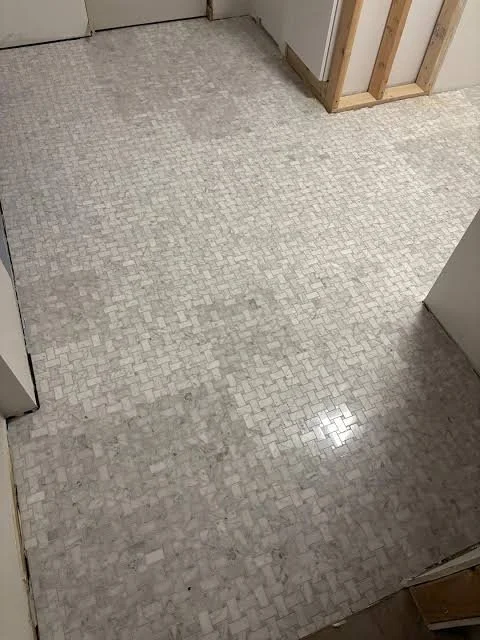
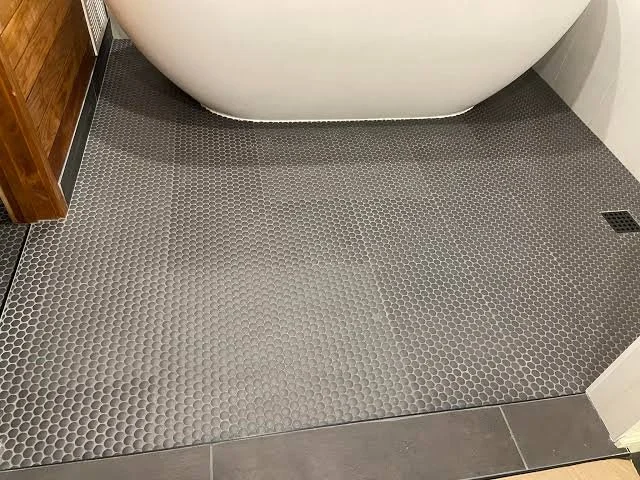
Mosaics are a big one. Penny tile, basketweave, hex, and other mosaics come on mesh sheets, and when sheets from different lots get mixed, you end up with visible blocks or patches across the floor.
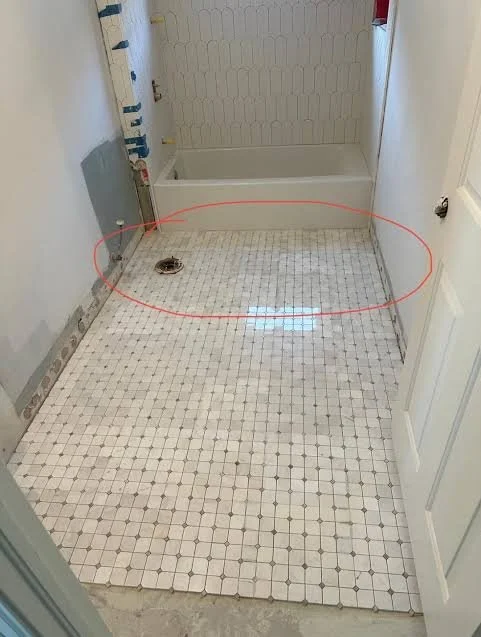
That red circle says it all. One section of that floor is clearly off from the rest, and fixing it after the fact means tearing out tile, which is expensive, messy, and frustrating.
The big box store problem
Here's where we need to be honest about something we see far too often.
If you buy your tile from a big box store like Floor & Decor, Lowe's, or any other large retailer, you are very likely to run into dye lot issues. It's not that those stores are bad actors. It's simply how their model works:
Inventory comes from everywhere. Boxes on the shelf may come from different production runs, and shelves get restocked over time.
Nobody is matching lots for you. Unless you know to check and ask, you're typically grabbing whatever is on the pallet or pulling from whichever boxes are available on the shelves.
Reorders are a gamble. Run short mid-project and go back for more? There's no guarantee the new boxes match the ones you already have, and the original lot may be long gone.
The result is that the burden of catching a mismatch falls on you, the homeowner, often only after the tile is already on the wall or floor.
How we do it differently
When you work with us, dye lots are something we manage for you from the very beginning.
Everything in your order comes from the same dye lot. We verify it before it ever reaches your home or your installer.
If you need more, we match it. Even if we didn't order enough the first time (it happens, even with careful measuring and overage) we reference your original order when placing the add-on order so the new material comes from the same dye lot.
No guessing, no crossing your fingers, and no discovering a mismatch halfway through the install.
A few tips, wherever you shop
Even if you end up buying elsewhere, these will protect you:
Check the lot number on every box before you leave the store or accept a delivery. They should all match.
Order extra. A common guideline is 10 to 15 percent overage, more for complex layouts, diagonal patterns, or small spaces.
Buy it all at once. Don't split your order across multiple purchases if you can avoid it.
Open several boxes and mix tiles while installing, rather than finishing one box at a time. This helps blend any subtle variation.
Check tile before it goes on the wall. Lay out a few boxes in good light before mortar is mixed. Once it's set, it's set.
Keep your original paperwork. If you need to reorder, the lot number and order details are your best shot at a match.
The bottom line
Tile is a big investment, and it's a permanent one. A beautiful product can be ruined by a mismatch you could have avoided, and the savings from a big box purchase can disappear quickly if you end up with a floor you're not happy with.
When you work with Fifth and College Tile & Design Co., you get more than product. You get someone watching out for the details you shouldn't have to think about, starting with making sure everything matches.
Ready to start your project? Stop by our Albemarle, NC location, give us a call, or send us a message. We’d love to help you get it right the first time.